Upskilling the Workforce on Digital Information Technology Acquisition
A training and development program teaches federal government acquisition professionals to design innovative and flexible procurement vehicles for information technology/digital services as well as how to become leaders of change in their organizations.
By Joel Dimaapi, FAC-C-DS, CPCM, MSOM
 The federal government has been actively preparing for the modern workforce over the past decade, aiming to increase efficiency and effectiveness. A key component of this effort is transforming how citizens interact with their government by delivering data, information, and transactional services across multiple platforms.
This new generation of digital services requires the workforce to learn and apply new skills, including how to buy these services effectively.
To address this need, the Office of Federal Procurement Policy (OFPP) and the United States Digital Service (USDS) launched a challenge several years ago to create an innovative training and development program for contracting professionals. (1)
This initiative led to the Digital Information Technology Acquisition Professional (DITAP) program, piloted with two cohorts and now being scaled up for wider adoption by government and commercial training organizations. This article discusses the program and its importance for today’s workforce.
What is DITAP?
The Digital Information Technology Acquisition Program (DITAP) is a training and development program that teaches federal government acquisition professionals to design innovative and flexible procurement vehicles for information technology/digital services as well as how to become leaders of change in their organizations.
Upon successful completion of the six-month program, DITAP students earn 80 Continuous Learning Points (CLPs) and a DITAP Training Certificate that can be used to achieve Federal Acquisition Certification in Contracting (FAC-C) Digital Services Core-Plus Certification (Digital Services Credential) through the Federal Acquisition Institute (FAI). (2)
DITAP is tailored for government Contracting Officers (COs), Contracting Officer’s Representatives (CORs), Program and Project Managers (PMs), and other acquisition professionals. A DITAP cohort (class) may consist of students within one agency or from various agencies and are conducted remotely with no travel requirements.
On certain occasions, in-person cohorts may be provided, in which the sponsor agency covers all training-related travel costs for participants. (3) This program applies to all executive agencies except the Department of Defense (DoD). The DoD continues to implement and manage its own acquisition training and certification policies.
Origin of USDS
In response to the challenges brought upon by the rollout of the Affordable Care Act (ACA) healthcare.gov portal, former President Barrack Obama founded the U.S. Digital Service (USDS) in August 2014.
The USDS mission is “To deliver better government services to the American people through technology and design.” (4) This initiative brought together the best technical minds in the industry and top federal employees to share best practices from various disciplines to change the government’s approach to the procurement of technology.
The fledgling agency, with very limited manpower, deployed small teams to address some of the most critical government services at that time. USDS teams collaborate with public servants across federal agencies to address some of their most critical needs and ultimately deliver a better government experience to their customers. (5)
A FAC-C-DS Journey
My FAC-C-DS journey began on June 20, 2023, when I reported to the Office of Federal Student Aid (FSA) under the Department of Education (DoEd). As a Senior Contract Specialist administering, maintaining, and executing robust, cloud-based, innovative applications contracts for enterprise customers, I was assigned to complete the DITAP training program. It became apparent that learning this digital competency was key to successfully providing service and supporting my customers.
The DITAP training program is aligned with the FAC-C Modernization Memorandum issued by the OFPP on January 19, 2023. This memorandum is intended to promote parity and mobility within the DoD’s recent change and shift in its contracting certification and acquisition training delivery. The directive represents a shift in the federal government’s traditional way of developing its acquisition work-force and transitioning into a lifelong learning model – one that incorporates best practices in modern learning, training agility, and continuous professional growth. (6)
Additionally, according to Federal Acquisition Institute Cornerstone On Demand (FAI CSOD), the federal government’s acquisition workforce learning management system, “FAC-C (Professional) certification holders assigned to acquisitions consisting primarily of digital services over Federal Acquisition Regulation (FAR) 13.500(c) thresholds are required to attend DITAP training.” (7)
My DITAP training started in October 2023, culminating in our team’s capstone presentation in April 2024. Our cohort was comprised of COs, CORs and other acquisition professionals from the Department of Education Office of Federal Student Aid (DoED/FSA), General Services Administration (GSA), Center for Disease Control and Prevention (CDC), and National Institutes of Health (NIH).
Course Content
The course includes multiple sets of case studies, reading assignments, and team projects that require dedicated time and effort to read, understand, and analyze ahead of time. The case studies and reading assignments were based on actual digital or information technology-related events experienced by businesses and government agencies.
Lessons utilize a combination of virtual classroom sessions, webinars, and 24/7 access to a learning portal. The self-paced reading assignments provide the foundational knowledge necessary to acquire the skills needed to procure cutting-edge technologies that enable government agencies to effectively deliver and execute their functions on a day-to-day basis. They were very relevant and critical in understanding the history, development, and future trajectory of the digital industry.
The DITAP course is currently provided by two types of providers – authorized and contingent. The USDS classifies Authorized Providers as having met all the criteria and already demonstrated the capability to deliver and run their DITAP cohorts successfully on multiple occasions. Meanwhile, a Contingent Provider is an organization that has shown interest in becoming an Authorized Provider and built its program but has yet to run a cohort. A list of DITAP Authorized Providers, along with their websites, can be found on the USDS portal. (8)
Other highlights of the course include:
- Capstone Project (either an Agile, Lean, or Human Centered Design team project). The capstone project was a team project that demonstrated the application of the core principles learned from the course. It consisted of a case study, presentation (slide show), and evaluation of instructors and peers.
- Shadowing of a Digital Services Implementation/Delivery Team (private sector entities). The shadowing piece of the course required students to shadow (observe and interact with) a digital services implementation team from a business entity as they develop and deliver services in a government or commercial environment. Students were required to submit a shadowing experience summary and feedback highlighting the concepts and constructs observed during the period.
- Acquisition Stakeholder Interviews (major Influencer/Gatekeeper within an agency). Students were required to complete two stake-holder interviews to gain familiarity with their acquisitional hierarchy, develop relationships (vertically and horizontally), foster organizational culture transformation, and gain visibility as change agents and leaders in the space. Students were required to submit stakeholder interview summaries and feedback (for each interview) highlighting the interviewee’s sphere of influence and control as well as their leadership qualities and technical expertise observed.
- Collaboration Amongst Students. DITAP students were required to participate in virtual discussions, post reactions/comments to discussion boards and forums, and provide written feedback, comments, and responses to self-directed learning and reading assignments.
- Instructors and Facilitators. The instructors teaching the course were very impressive, representing decades of experience in government acquisitions as well as information technology, digital technology and services, network security, and Agile, Lean, and Human Centered Design from the private industry. They were very knowledgeable, compassionate, and engaging. The instructors were excellent teachers, facilitators, and speakers who encouraged students to think critically and holistically. They expertly related their personal experiences and current events to the topics at hand while captivating the students’ attention and interest.
Useful Tools for Acquisition of Digital Services
Digital Services Playbook (9)
The USDS created the Digital Services Playbook, which is a set of 13 detailed “plays” or strategies that can be used by government agencies and contractors to develop solutions or resolve issues for their customers. Each play is derived from proven best practices from commercial environments that can be leveraged to successfully deliver digital services to customers. The plays emphasize flexibility, iterative configurations, and responsiveness with the end-users in mind.

TechFAR Handbook (10)
The TechFAR Handbook (also known as TechFAR Hub) is an online resource available from the USDS portal that underscores the maximum use of the FAR hand-in-hand with the Digital Services Playbook to help government agencies procure, develop, and implement digital service solutions.
The TechFAR Hub contents have been arranged to match the four phases of the federal government’s acquisition lifecycle (Pre-Solicitation, Solicitation, Pre-Award, Award/Contract Administration). The portal also contains resources such as Tools, Templates & Samples, Case Studies, a Learning Center section, and a contract solutions and vehicles library.

Procuremenati (11)
The USDS team of elite subject matter experts (SME) includes a small group of top-notch acquisition professionals called the “Procuremenati.” The Procuremenati are USDS acquisition experts who apply methodologies from the private sector to acquire and manage digital tools and services on a regular basis.
The Procuremenati provide assistance to bring government buyers up to date in utilizing creative approaches and innovative techniques to develop contract vehicles for the procurement of digital products and services. The team also promotes getting the most value for taxpayer money to the maximum extent practicable while fostering critical business relationships with industry. Information about the Procuremenati is embedded in the Learning Center section of the TechFAR Hub’s Resources list.
Federal Risk and Authorization Management Program
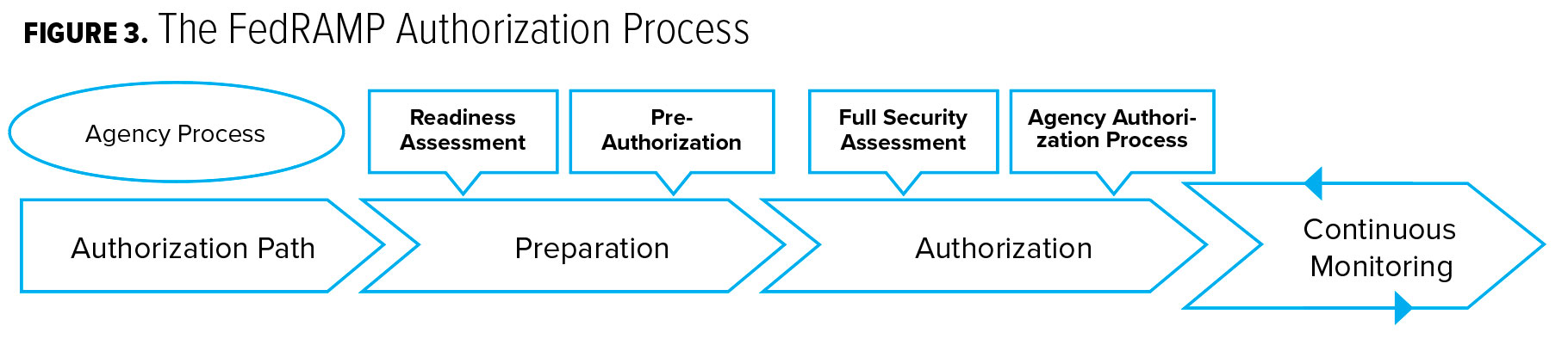
The Federal Risk and Authorization Management Program (FedRAMP), is a government-wide program owned and managed by GSA to provide a common, cost-effective, risk-based approach for the adoption and use of cloud services by federal government agencies.
FedRAMP provides a standardized approach to security authorizations and risk assessments for government cloud service programs and projects utilizing the National Institute of Standards and Technology (NIST) standards and guidelines.
Although created in 2011, in December 2022, the FedRAMP Authorization Act was signed as part of the Fiscal Year 2023 National Defense Authorization Act (NDAA). The Act established FedRAMP as the authoritative standard for cloud computing products and services that process, store and manage unclassified federal information. (12)
In line with the Federal Information Security Modernization Act (FISMA), FedRAMP provides the systematic baseline requirements, review, and approval process for all federal agencies in their cloud computing endeavors. As a result, these agencies save taxpayer dollars and achieve efficiencies while reducing variations in results by applying best practices in their cloud ecosystems.
Acquisition Gateway (13)
The Acquisition Gateway contains information useful for acquisition professionals and teams when conducting research for government-wide acquisition programs, policies, and market strategies. The portal acts as a focal hub for federal buyers to contact subject matter experts, compare/contrast solutions, find templates, review historical pricing data, etc. The Acquisition Gateway is the official online government platform where acquisition professionals connect with information resources they require to successfully execute their mission.
Periodic Table of Acquisition Innovations (14)
The Periodic Table of Acquisition Innovations (PTAI) is a professional resource for acquisition developed through collaboration between government and industry. PTAI is located within the Acquisition Gateway website and includes information about acquisition techniques and acquisition automations that help federal agencies increase competition, fast-track awards, shorten delivery times, enhance customer satisfaction, improve accuracy, save labor hours and better manage their operating budgets.
Procurement Innovation Lab (15)
The Procurement Innovation Lab (PIL) was established in 2015 by the Department of Homeland Security (DHS); it aims to test creative methodologies and innovative techniques in resolving acquisition challenges throughout the department.
According to DHS, the PIL provides a safe space to test new ideas, share lessons learned, and promote best practices. It fosters cultural changes that promote innovation and managed risk-taking through a continuous feedback cycle. DHS has a PIL Team that provides training and advisory support for other federal agencies requesting assistance in creating and implementing their own agency PIL.
Permissible Exercise of Authority (PEA) FAR 1.102 (d)
During several discussions throughout this program, facilitators emphasized that the FAR should not be regarded as a rigid and inflexible document inhibiting the efficient procurement of goods and services. Instead, the FAR should be utilized as a powerful tool and enabler providing flexibility while encouraging creativity in government contracting. FAR 1.102 (d) states:
The role of each member of the Acquisition Team is to exercise personal initiative and sound business judgment in providing the best value product or service to meet the customer’s needs. In exercising initiative, government members of the Acquisition Team may assume if a specific strategy, practice, policy, or procedure is in the best interests of the Government and is not addressed in the FAR, nor prohibited by law (statute or case law), Executive Order or other regulation, that the strategy, practice, policy or procedure is a permissible exercise of authority. (16)
In essence, if something is not forbidden by the FAR (and not unlawful or illegal), contracting officers and government buyers should explore these possibilities to achieve acquisition goals and objectives. This profound and empowering FAR clause can be leveraged throughout the acquisition process and elsewhere.
Ongoing Community Support for Program Alumni
Upon completion, DITAP providers send USDS a list of all graduates’ names to be added to the DITAP Alumni LISTSERV. Course graduates not only receive their DITAP certification and FAC-C-DS credentials; they also become part of a community of digital acquisition pioneers leading, collaborating and driving to improve government procurement while building strategic relationships with digital service vendors and contractors.
The DITAP course is an effective way to learn insights and gain hands-on understanding of the digital acquisition realm. Beyond the DITAP certification and FAC-C-DS credential, program graduates have an excellent opportunity to network with other acquisition professionals, share best practices and take advantage of the synergy and creative momentum. CM
This article was written in the author’s personal capacity. The views expressed and presented in this article are solely those of the author and do not necessarily represent the views of the Department of Education, Office of Federal Student Aid or any of its components.
Joel Dimaapi, FAC-C-DS, CPCM, MSOM is a Senior Contracts Specialist for the Aid Delivery and Partner Management Group (Acquisitions Directorate) U.S. Department of Education Office of Federal Student Aid (USDOE FSA). He provides support administering, maintaining and executing robust, cloud-based, innovative applications contracts for USDOE FSA enterprise customers with a portfolio grand total in excess of $300 million. Dimaapi provides mentorship, advice and coaching in areas of leadership, motivation, performance improvement, goal setting, time management as well as Navy Core Values. He is a retired Naval Officer (Information Systems Designator) with over 23 years of service and has been a federal acquisition professional community member since 2003. He has more than 34 years of combined military and civilian service in contracting, information technology as well as supply and logistics in the Navy.
ENDNOTES
1 Source: https://www.fai.gov/announcements/new-fac-specialization-focuses-digital-services
2 Digital IT Acquisition Professional Training Program (DITAP) (usds.gov)
3 Ibid
4 https://www.usds.gov/mission
5 https://www.usds.gov/how-we-work
6 https://www.whitehouse.gov/wp-content/uploads/2023/01/FAC-C-Modernization-Memorandum-19-Jan-2023.pdf
7 CFCN 001 Digital Services Credential (DITAP) Concept Card, Last Modified 9/27/2023
8 https://techfarhub.usds.gov/get-started/ditap/
9 https://playbook.usds.gov/
10 https://playbook.usds.gov/techfar/
11 https://medium.com/the-u-s-digital-service/meet-the-procuremenati-usds-acquisition-experts-1e99346822b5#.b3dfkjtji
12 https://www.fedramp.gov/program-basics/
13 https://acquisitiongateway.gov/
14 https://www.FAI.gov/periodic-table/
15 https://www.dhs.gov/pil
16 FAR 1.102 Statement of Guiding Principles for the Federal Acquisition System